
Many Muslim parents worry when their child struggles with Arabic sounds during Quran recitation. The child may confuse ح and ه, read ق like k, or find ع difficult. This is normal for children who do not speak Arabic every day. Arabic pronunciation for Quran is a skill that grows through listening, modeling, correction, and gentle practice.
The goal is not to make a child perfect in one week. Instead, the goal is to help the child hear the difference, move the mouth correctly, and feel safe while trying again. If pronunciation is corrected with pressure, the child may become afraid to recite. However, if correction is clear and kind, the child can improve steadily.
In this guide, you will learn how non-Arabic kids can improve Quran pronunciation. We will cover the most difficult Arabic letters, how to practice without stress, how Tajweed connects to pronunciation, and when to start Noorani Qaida. You can also read Darajat’s guide on Tajweed for non-Arabic speakers if your child already reads but needs clearer recitation.
Quick Answer
The best way to improve Arabic pronunciation for Quran is to start with a level assessment, focus on one sound at a time, use a qualified teacher, practice short Quranic words, and correct mistakes gently. Non-Arabic kids should not be rushed into long recitation before building sound awareness.
Why Quran Pronunciation Is Hard for Non-Arabic Kids

A child who grows up speaking English, French, Spanish, or another language may not hear Arabic sounds in daily life. Therefore, some Quran letters feel completely new. The child may not know how to place the tongue, open the throat, or stretch the sound. This does not mean the child is careless. It means the sound system is unfamiliar.
For example, the letter ع does not have an easy English equivalent. The letter ح is not the same as h. The letter ق is deeper than a normal k sound. Also, Arabic short vowels change the sound of a letter quickly. These details make pronunciation difficult at the beginning.
Because of this, a good teacher should not simply say, “Say it again.” The teacher should model the sound, explain it simply, listen carefully, and correct one step at a time. A non-Arabic child needs a bridge between familiar sounds and Quranic Arabic.
Arabic Pronunciation for Quran Is Not Just an Accent Issue
Some parents think pronunciation is only about having a nice Arabic accent. However, Quran pronunciation is more serious than that. In Quran recitation, letter sounds matter because changing a sound can affect the word. The goal is not cultural perfection. The goal is correct and respectful recitation.
At the same time, parents should avoid panic. Children learn gradually. A beginner does not need to master every letter before opening the Mushaf. Still, they should receive correction early so that repeated mistakes do not become habits.
This balance is important: accuracy without fear, correction without shame, and progress without rushing. When the child feels safe, they are more willing to practice difficult sounds.
| Common Sound | Typical Challenge | Gentle Teaching Approach |
|---|---|---|
| ح | Child reads it like normal h. | Model the deeper breathy sound slowly. |
| ع | Child cannot find the throat sound. | Use short repeated examples without pressure. |
| ق | Child says k instead. | Practice back-of-mouth placement gently. |
| ر | Child over-rolls or weakens it. | Use short words and avoid pressure. |
Start With Listening Before Correction
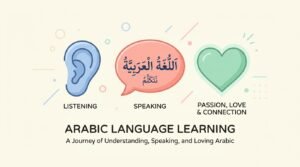
Before a child can say a sound correctly, they need to hear it clearly. Listening trains the ear. If the child cannot hear the difference between ه and ح, they will struggle to produce the difference. Therefore, listening should come before heavy correction.
A teacher can read the sound slowly, then use a short Quranic word. The child listens first. Then the child repeats. After that, the teacher gives one correction. This order is much better than interrupting the child every few seconds.
Parents can support this at home with short audio. However, they should not overcorrect if they are unsure. It is better to ask the teacher which sound to practice and how to practice it.
The Most Difficult Arabic Letters for Non-Arabic Kids
Every child is different, but some letters are commonly difficult. These include ع, ح, خ, ق, غ, ص, ض, ط, ظ, and ر. The teacher should not teach all of them at once. Instead, they should choose the most important sound for the child’s current Surah or reading level.
For example, if the child is learning Surah Al-Falaq, ق may need attention. If the child is practicing Surah Al-Ikhlas, ح and د may need careful listening. The best practice is linked to the Surah the child is already learning.
| Letter Group | Why It Is Hard | Practice Tip |
|---|---|---|
| Throat letters | They are not common in English speech. | Practice one sound at a time. |
| Heavy letters | The child may not feel sound thickness. | Compare light and heavy sounds gently. |
| Rolled ر | It may be too strong or too weak. | Use short words and avoid pressure. |
| Similar sounds | Letters may sound the same to beginners. | Train the ear before the tongue. |
How Noorani Qaida Helps Pronunciation

Noorani Qaida can be very helpful because it teaches letters, vowels, joining, Sukoon, Shaddah, and Madd in a structured order. For non-Arabic kids, this structure prevents random learning. The child does not only memorize by sound. They begin to understand how Arabic sounds connect to written symbols.
However, Noorani Qaida should not be taught as dry repetition. The teacher should use it to build real pronunciation. For example, when the child reads a letter with Fathah, the teacher checks the sound. When the child reads Madd, the teacher checks the stretch. This makes the foundation practical.
If your child is a beginner, Darajat’s article on Noorani Qaida for non-Arabic kids explains why this method works before full Quran reading.
A 4-Step Method to Correct Quran Pronunciation
The correction method matters. If the teacher only says “wrong,” the child may feel embarrassed. A better method has four steps: model, repeat, correct, and apply. This method keeps correction clear and positive.
| Step | Teacher Action | Child Experience |
|---|---|---|
| 1. Model | Teacher reads the sound clearly. | Child hears the target. |
| 2. Repeat | Child repeats slowly. | Child tries without fear. |
| 3. Correct | Teacher gives one simple instruction. | Child knows what to improve. |
| 4. Apply | Teacher uses a Quranic word or phrase. | Child connects practice to Quran. |
How Tajweed Connects to Pronunciation
Tajweed is not only a set of rules. It is a way to protect the sound of Quran recitation. For children, Tajweed should begin practically. The teacher can focus on Madd, Ghunnah, heavy letters, and stopping. These skills directly improve pronunciation.
For example, if a child cuts Madd too short, the teacher can practice stretching. If the child misses Ghunnah, the teacher can model the nasal sound gently. If the child makes all letters light, the teacher can introduce heavy letters slowly. The child does not need all the technical names at once.
Therefore, Tajweed and pronunciation should work together. A child can memorize and read, but every lesson should include one small sound target. This keeps recitation improving without overwhelming the child.
A 30-Day Pronunciation Practice Plan
This plan is a simple example. It should be adjusted after a teacher assessment. The goal is not to master every letter in 30 days. The goal is to build awareness and improve one sound at a time.
| Week | Main Focus | Home Practice |
|---|---|---|
| First week | Assessment and listening | Listen to one assigned sound daily. |
| Second week | One difficult letter | Repeat short words with teacher notes. |
| Third week | Madd or Ghunnah | Practice one rule inside a short Surah. |
| Fourth week | Apply in recitation | Read a short passage with fewer corrections. |
After 30 days, parents should not ask only, “Is the sound perfect?” A better question is, “Does my child hear the difference better and try with more confidence?” That is real progress.
How Parents Can Help at Home

Parents can help, but they should keep practice short. Five minutes of focused review is better than a long stressful session. Ask the teacher which sound to practice. Then repeat only that sound or word. Do not correct everything at once.
Also, praise the child’s effort. Say, “I like how you tried again,” or “That sound became clearer.” This kind of praise helps the child stay motivated. It also teaches the child that pronunciation improves through practice.
If parents are unsure about a sound, they should avoid guessing. Wrong home correction can confuse the child. Instead, they can play the teacher’s assigned audio and let the child repeat gently.
Online Pronunciation Classes: Do They Work?
Yes, online pronunciation classes can work very well if they are live and interactive. The teacher must be able to hear the child clearly, correct the sound, and repeat examples. A recorded video may help with listening, but it cannot replace live correction.
For non-Arabic kids, one-on-one online lessons are often better at the beginning. The teacher can focus on the child’s exact mistakes. The child can repeat without feeling embarrassed in front of a group. After confidence improves, group review may become useful.
If you are choosing a teacher, read Darajat’s guide on how to choose a Quran teacher for non-Arabic speakers. The right teacher makes pronunciation practice much easier.
Pronunciation and Memorization Should Support Each Other
Some children memorize quickly but pronounce weakly. Others focus on pronunciation so much that they lose motivation to memorize. A balanced plan is better. The teacher can choose a short memorization portion and one pronunciation target.
For example, if the child is memorizing Surah Al-Falaq, the sound ق can be a focus. If the child is memorizing Surah Al-Ikhlas, the teacher may focus on ح and Madd. This keeps pronunciation connected to real Quran learning.
For a full memorization plan, read Quran memorization for non-Arabic kids. It explains how to balance listening, review, Tajweed, and motivation.
How to Track Pronunciation Progress
Parents often ask, “Is my child improving?” The answer is not always obvious after one lesson. Pronunciation progress is gradual. A child may first hear the difference, then attempt the sound, then say it correctly in isolation, and finally use it inside Quran recitation. Each stage is progress.
Therefore, parents should track small signs. Can the child identify the sound when the teacher says it? Can the child repeat it more clearly than before? Does the child correct themselves sometimes? These are valuable signs, even if the sound is not perfect yet.
| Progress Stage | What It Looks Like | Parent Response |
|---|---|---|
| Hearing | Child notices two sounds are different. | Praise careful listening. |
| Trying | Child attempts the sound even if imperfect. | Praise courage and effort. |
| Improving | Sound becomes clearer in short words. | Keep practice short and regular. |
| Applying | Child uses the sound inside a Surah. | Review gently and celebrate progress. |
When Should You Ask for a Pronunciation Assessment?
A pronunciation assessment is useful if the child repeats the same mistakes, avoids recitation, reads very unclearly, or memorizes by audio but cannot connect sounds to text. Assessment is also helpful before starting a new Quran program, because it shows whether the child needs letters, Tajweed, Noorani Qaida, or recitation correction.
The assessment should not feel like an exam. It can be a calm session where the teacher listens to a short Surah, checks a few letters, and asks the child to repeat some sounds. After that, the teacher gives parents a clear starting point.
This saves time. Without assessment, parents may choose memorization when the child needs letters, or choose advanced Tajweed when the child needs basic sound practice. With assessment, the plan becomes more realistic.
Should Parents Use Transliteration?
Transliteration means writing Arabic sounds using English letters. It can help a child at the very beginning, but it should not become the main method. English letters cannot fully represent Quranic Arabic sounds. For example, writing “ha” cannot show the real difference between ه and ح.
If transliteration is used, it should be temporary and teacher-guided. The child should gradually move toward Arabic letters. Otherwise, the child may memorize English-looking words instead of learning the Mushaf.
A better approach is to combine listening, Arabic letters, and short Quranic words. This helps the child build a real connection with the Quran text. Transliteration may support the first step, but it should not replace Arabic reading.
Common Mistakes to Avoid
Mistake 1: Expecting Instant Perfection
Pronunciation takes time. If a child cannot say ع in the first lesson, that is normal. Keep practice short and consistent.
Mistake 2: Correcting Too Many Sounds at Once
Too much correction creates confusion. Choose one sound or one rule. Then repeat it across several lessons.
Mistake 3: Skipping Listening
The child needs to hear the sound clearly before producing it. Listening is not a waste of time. It is part of pronunciation training.
Mistake 4: Depending Only on Apps
Apps can support practice, but they cannot hear your child’s exact pronunciation. Live teacher correction is still important.
Mistake 5: Making the Child Feel Embarrassed
If the child feels ashamed, they may stop trying. Correction should be clear, but the tone should remain kind and encouraging.
A Weekly Routine for Quran Pronunciation
A weekly routine helps the child improve without feeling overloaded. The routine should not be long. It should repeat the same sound in different ways. First, the child listens. Then the child repeats. After that, the teacher connects the sound to a short Quranic word. Finally, the child applies it inside a short Surah or phrase.
For example, if the target sound is ق, the teacher may use a few simple words and then connect the sound to Surah Al-Falaq. If the target sound is ح, the teacher can use short words from familiar Surahs. This makes practice meaningful, because the child sees that pronunciation is not separate from Quran reading.
| Day | Practice Focus | Time Needed |
|---|---|---|
| Monday | Listen to the target sound. | short listening |
| Tuesday | Repeat short words slowly. | brief practice |
| Wednesday | Use the sound in a Surah phrase. | short application |
| Weekend | Review with teacher feedback. | teacher review |
This routine is simple, but it works because it repeats one goal. Children do not need a new sound every day. They need enough time to hear, try, improve, and apply. Therefore, one sound per week may be better than five sounds with no confidence.
How to Keep Pronunciation Practice Child-Friendly
Pronunciation practice can become boring if it is only repetition. A good teacher changes the activity while keeping the same target sound. The child may listen once, repeat once, point to the letter, read a short word, and then try a Quran phrase. The goal stays the same, but the activity changes.
For younger children, visual support helps. Letter cards, mouth-position hints, short listening clips, and simple hand signals can make the sound easier to remember. For older children, the teacher can explain more clearly where the sound comes from, but still without turning the lesson into a difficult theory class.
Most importantly, the teacher should end with success. Even if the sound is not perfect, the child should finish the lesson knowing what improved. This emotional ending matters. A child who leaves the class encouraged is more likely to practice again.
When Pronunciation Affects Al-Fatihah
Al-Fatihah is one of the most important parts of a child’s Quran journey because it is used in prayer. Therefore, if a child has major pronunciation mistakes in Al-Fatihah, the teacher should give it special attention. This does not mean frightening the child. It means correcting patiently and consistently.
The teacher may divide Al-Fatihah into small phrases. Each phrase can have one focus. For example, one lesson may focus on the sound ح. Another lesson may focus on the difference between ص and س. A third lesson may focus on Madd. This gradual approach is easier than correcting the whole Surah at once.
Parents can also help by listening to the teacher’s assigned recording. They should avoid comparing the child with adults or older siblings. Al-Fatihah improvement is a journey. With calm repetition, the child can recite it more clearly and with more confidence.
Frequently Asked Questions
Q: Why is Arabic pronunciation difficult for Quran learners?
A: Many Quran sounds do not exist in English or other languages. Non-Arabic kids need listening, modeling, and gentle correction.
Q: Should my child master pronunciation before memorizing?
A: No. Short memorization can begin, but pronunciation correction should be included from the start.
Q: Is Noorani Qaida useful for pronunciation?
A: Yes. It helps children connect Arabic letters, vowels, and sounds in a structured way.
Q: Can online classes improve Quran pronunciation?
A: Yes, if they are live, one-on-one or small, and the teacher listens and corrects directly.
Q: How long does pronunciation improvement take?
A: It depends on the child. Some sounds improve in weeks, while others need months of gentle practice.
Final Thoughts: Clear Recitation Starts With Gentle Practice
Improving Arabic pronunciation for Quran is possible for non-Arabic kids, but the journey should be realistic. The child needs listening, a qualified teacher, one sound at a time, and a safe space to try again.
Do not rush. Start with assessment. Choose a small target. Connect pronunciation to real Quran words. Then build gradually. With patience and the right teacher, the child can recite more clearly and feel more confident with the Quran.
Need Help With Your Child’s Quran Pronunciation?
Book a free assessment lesson. We will check your child’s Arabic sounds, Quran reading level, Tajweed needs, and the best starting point.
