
Noorani Qaida Lesson 7 introduces a major change in beginner Quran reading: the learner moves from short vowel sounds to controlled long vowel sounds. In this lesson, students practise Standing Fatha, Standing Kasra, and Standing Damma and learn to extend the sound for two counts.
Previously, a Fatha, Kasra, or Damma was read quickly. Now, the learner must notice special long-vowel forms and hold the sound without rushing or stretching it too far.
Edition note: Noorani Qaida editions can differ in lesson numbering. In the sequence used for this article, Lesson 7 introduces Standing Fatha, Standing Kasra, and Standing Damma. Therefore, always follow the book used by your teacher if its numbering is different.
Quick answer
- Lesson 7 introduces basic long vowel sounds.
- Standing Fatha produces an extended “aa” sound.
- Standing Kasra produces an extended “ee” sound.
- Standing Damma produces an extended “oo” sound.
- Each basic long vowel is practised for two counts.
- A long vowel must not be confused with Tanween.
- The learner should keep timing steady instead of stretching by guesswork.
What Does Noorani Qaida Lesson 7 Teach?
Noorani Qaida Lesson 7 teaches beginners to recognise and pronounce three basic extended vowel patterns.
Until this point, a learner may be comfortable reading short sounds such as بَ, بِ, and بُ. However, Quran reading also contains vowel sounds that continue for longer.
Therefore, this lesson introduces a simple timing rule: hear the long sound, hold it for two balanced counts, and then move naturally to the next sound.

Short Vowels vs Long Vowels
The most important idea in this lesson is the difference between a quick Harakah and an extended vowel.
| Short form | Long form | Main difference |
|---|---|---|
| بَ | بَا / extended Fatha form | The long sound continues for two counts |
| بِ | بِي / extended Kasra form | The long sound continues for two counts |
| بُ | بُو / extended Damma form | The long sound continues for two counts |
As a result, vowel length becomes part of accurate reading. The learner should hear a real difference between the short and long form.
1. Standing Fatha
Standing Fatha produces an extended open vowel sound. In beginner teaching, it is commonly connected with the same basic sound produced by Alif Madd.
First, begin with the short sound:
بَ
Then compare it with the long form:
بَا
The second form should continue for two controlled counts. However, the learner should not open the mouth excessively or turn the extension into shouting.
Common Standing Fatha mistake
A beginner may shorten the long sound until it becomes almost identical to Fatha. In contrast, another learner may hold it for far too long.
Therefore, use a calm two-count model and repeat it at the same reading speed.
2. Standing Kasra
Standing Kasra produces an extended “ee”-type sound. It is connected with the basic long vowel formed with Yaa.
Compare:
بِ بِي
The first sound is short. Meanwhile, the second continues for two counts.
Keep the sound clean and steady. In addition, avoid adding a nasal quality unless another Tajweed rule independently requires Ghunnah.
Common Standing Kasra mistake
Some learners begin correctly but allow the sound to become weak before completing the two counts. Therefore, practise with smooth, continuous airflow.
3. Standing Damma
Standing Damma creates an extended rounded vowel sound connected with Waw Madd.
Compare:
بُ بُو
The lips should round naturally for the vowel. However, there is no need to exaggerate the lip movement.
Again, keep the sound at two balanced counts rather than changing its length according to melody.
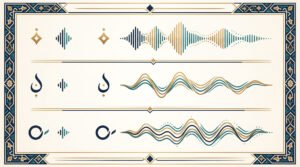
Why Two Counts Matter
Two counts introduce the learner to controlled Madd timing. However, a count is not a fixed number of seconds.
Instead, the count changes naturally with the speed of recitation. A slow reader’s two counts take more clock time than a faster reader’s two counts.
Therefore, the goal is proportion. Each basic long vowel should remain consistent with other similar long vowels in the same reading speed.
Standing Vowels and Natural Madd
Lesson 7 prepares the learner for the Tajweed concept commonly called Natural Madd or Madd Asli.
The basic Natural Madd sound lasts two counts when no stronger cause changes the rule.
At this stage, however, the student does not need to memorise a long list of advanced Madd categories. First, build accurate two-count timing. Later, the learner can study connected, separated, required, and stopping-related Madd rules.
For an authoritative overview of Madd categories and counts, see the Egyptian Ministry of Awqaf guide to Madd and Qasr.
Standing Vowels Are Not Tanween
Because the learner has recently studied Tanween, visual confusion can happen. Therefore, compare the two skills directly.
| Feature | Long vowel | Tanween |
|---|---|---|
| Main sound | Extended vowel | Short vowel plus ending Noon sound |
| Timing | Two counts in this basic form | The vowel itself remains short |
| Nasal ending? | No, not from the long vowel itself | Yes, in connected pronunciation |
As a result, the learner should not turn a long vowel into Tanween or add an unnecessary nasal sound.
How to Practise Noorani Qaida Lesson 7
A simple routine works better than reading a long page without a clear goal.
- Read the short vowel: produce one quick sound.
- Read the long vowel: extend the matching sound for two counts.
- Compare them: make sure the difference is clearly audible.
- Change the consonant: practise the same timing on several letters.
- Mix all three long vowels: avoid memorising a fixed sequence.
- Read short words: apply the timing inside connected reading.
Simple Lesson 7 Practice
First, practise one vowel family at a time:
بَ → بَا
بِ → بِي
بُ → بُو
Next, change the letters while keeping the same timing.
Finally, mix the patterns. Consequently, the learner must identify the long vowel rather than predict the next example from page order.
Common Mistakes in Noorani Qaida Lesson 7
Reading the long vowel as a short vowel
This removes the main difference the lesson is trying to teach. Therefore, compare short and long sounds frequently.
Stretching beyond two counts
Long does not mean unlimited. At this stage, the basic long vowel should remain controlled at two counts.
Changing timing from one example to another
A learner may read one example correctly and stretch the next one further. Therefore, practise several examples at one steady speed.
Adding Ghunnah to the long vowel
The vowel itself does not require nasal sound. If the learner sends the sound into the nose unnecessarily, repeat a clean model.
Depending on English spelling
Writing “aa, ee, oo” can help explain the first idea. However, the learner should gradually connect the written Arabic pattern directly with its sound.
A 10-Minute Home Practice Routine
| Time | Activity |
|---|---|
| 2 minutes | Review Fatha, Kasra, and Damma |
| 2 minutes | Compare each short vowel with its long form |
| 2 minutes | Practise Standing Fatha |
| 2 minutes | Practise Standing Kasra and Standing Damma |
| 2 minutes | Read mixed examples at one steady speed |
Nevertheless, practice quality matters more than reaching exactly ten minutes. A younger child may benefit more from two short sessions.

How Parents Can Help
First, ask the learner whether the sound should be short or long. Then allow the child to read before giving the answer.
Next, use a gentle finger count if timing is unstable. However, stop relying on visible counting once the learner begins to feel the correct length naturally.
In addition, avoid correcting pronunciation by guesswork. If the sound is unclear, mark the example and ask the teacher at the next lesson.
When Is Lesson 7 Complete?
Readiness signs
- The learner hears the difference between short and long vowels.
- Standing Fatha is extended for two steady counts.
- Standing Kasra remains clear and non-nasal.
- Standing Damma is produced with natural lip rounding.
- Mixed long-vowel patterns can be read without guessing.
- Timing remains reasonably consistent across several examples.
Speed is not required. Instead, look for stable recognition and timing. Once these are secure, the learner is ready for more detailed Madd and Leen practice.
How Lesson 7 Fits Into the Noorani Qaida Journey
This lesson is the bridge between short-vowel reading and longer Quran sounds.
Earlier stages teach letter recognition, short vowels, and Tanween. Now, the learner begins to control sound duration. Afterward, later lessons can compare true Madd letters with Leen sounds and introduce more advanced combinations.
For the full beginner sequence, review our Noorani Qaida in English guide.
What Comes After Noorani Qaida Lesson 7?
In the sequence used here, the next stage expands long-vowel practice and introduces Madd and Leen patterns in greater detail.
Therefore, do not rush forward if two-count timing is still unstable. A strong long-vowel foundation makes later Tajweed rules significantly easier to understand.
Frequently Asked Questions About Noorani Qaida Lesson 7
What Does Noorani Qaida Lesson 7 Teach?
In the sequence used in this guide, Lesson 7 teaches Standing Fatha, Standing Kasra, and Standing Damma. These patterns introduce beginners to controlled long vowel sounds and two-count timing.
How Long Should the Vowels Be?
The basic long vowels in this lesson are practised for two counts. However, a count is relative to recitation speed rather than a fixed number of seconds.
What Is the Difference Between Fatha and Standing Fatha?
Fatha produces a short vowel sound. Standing Fatha produces an extended vowel sound. Therefore, the learner should hear a clear difference in duration between the two.
Is Standing Kasra the Same as Tanween?
No. Standing Kasra represents an extended vowel, while Kasratain is Tanween and produces a short vowel followed by an ending Noon sound during connected reading.
Should Long Vowels Have Ghunnah?
No. A basic long vowel does not require nasalisation by itself. Ghunnah belongs to other Tajweed patterns involving Noon and Meem.
Why Do Some Qaida Books Number This Lesson Differently?
Noorani Qaida editions can organise their chapters differently. Therefore, learners should follow the lesson headings and sequence in the edition used by their teacher rather than relying on the number alone.
Read Next
Practise Long Vowels With Live Correction
A teacher can check whether the learner is shortening long vowels, overstretching them, or changing the timing from one example to another.
